
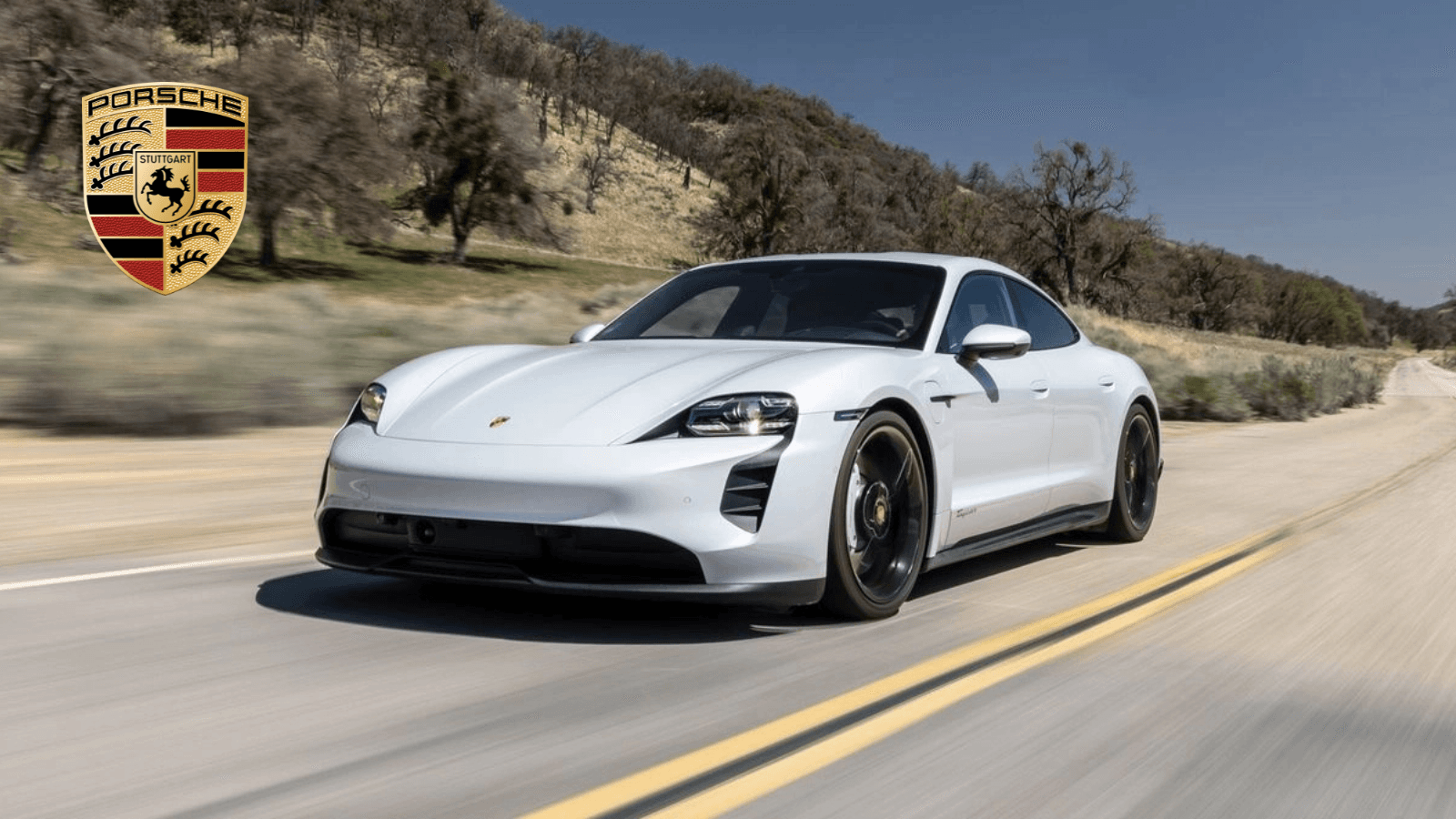
The History of Porsche
Although Porsche was officially founded in 1931, the brand's origins trace back to the late 19th century. The pioneering concepts envisioned by its founder during his youth profoundly shaped the DNA of contemporary models, establishing a quest for innovation that has lasted for nearly a century.
Ferdinand Porsche's Spirit of Invention
Even before establishing the engineering firm that would become one of the world's most famous automakers, Ferdinand Porsche demonstrated an exceptional talent for mechanics. In 1898, at the age of 23, he designed his first automobile in Austria: the C.2 Phaeton (also known as the P1). It featured a wooden, carriage-like frame powered by an electric drivetrain.
In collaboration with coachbuilder Lohner-Werke, the engineer refined this concept by developing electric, hybrid, and internal combustion versions. These "Lohner-Porsche" models made a name for themselves in motorsport, bringing international fame to the designer and selling several hundred units.
Although this initial venture ended in 1905, its underlying technical principle left a lasting impression: in the 1960s, NASA studied Porsche's concept of wheel-hub electric motors to design its Lunar Roving Vehicle.
The Founding of the Engineering Firm and the Pre-War Era
After spending around twenty years in the technical department at Mercedes, Ferdinand Porsche settled in Stuttgart to establish his own automotive design and consultancy firm: Dr. Ing. h.c. F. Porsche AG.
Between the founding of the company and the outbreak of World War II, the engineering firm worked on numerous projects. In addition to developing the "people's car" for Volkswagen (the Beetle), Porsche designed an exceptional single-seater for Auto Union (the forerunner of Audi). Funded with 250,000 Reichsmarks by Adolf Hitler's regime to assert German dominance on the racetrack, this innovative race car featured a mid-mounted 16-cylinder engine.
Involvement During World War II
Like most of the German automotive industry at the time, the company redirected its production toward military equipment as soon as the war broke out. Capitalizing on the success of his racing prototypes, Ferdinand Porsche joined the regime's inner circle of decision-makers.
He went on to design several military vehicles, including the amphibious Volkswagen Schwimmwagen and the Panzer heavy tank, and contributed to the development of the V-1 and V-2 rockets used in bombings against the United Kingdom. For his industrial and military achievements, the authorities at the time awarded him the title of "Great German Engineer."
The Post-War Era and Rebirth Under Ferry
Following the German surrender in 1945, companies under the former regime's control were seized by the Allied forces. Volkswagen and Porsche fell under French supervision. During the development of the Renault 4CV, Pierre Lefaucheux, head of Renault and a former French Resistance member, demanded charges against Ferdinand Porsche. The engineer was imprisoned alongside his son Ferry.
Released after six months in custody, Ferry Porsche took back the reins of the company. One of his first post-war contracts was designing the Type 360 for the Italian manufacturer Cisitalia: a four-wheel-drive racing prototype with a supercharged engine that was far ahead of its time, though it never actually competed in a race. Meanwhile, Ferdinand Porsche remained imprisoned for nearly two years due to his ties with the Nazi regime.
The Birth of the 356 and the Founder's Passing
The year 1948 marked the true starting point of the Porsche automaker as we know it today, with the release of the 356/1 roadster. Built using many Volkswagen parts, this model featured a rear-mounted flat-four (boxer) engine, wrapped in sleek bodywork inspired by the pre-war Type 64 prototype.
In 1951, Ferdinand Porsche passed away at the age of 75, leaving full leadership of the brand to his son Ferry.
After relocating to Gmünd during wartime bombings, the factory returned to Stuttgart and launched series production of the 356. Over its iterations, the model won over sports car enthusiasts thanks to its exceptional agility. Porsche solidified this reputation in motorsport with highly effective race cars like the 550 Spyder, which famously won the Targa Florio in 1956. A few years later, in 1962, the firm secured its first Formula 1 victory at the French Grand Prix with the Porsche 804.
The Creation of the Legendary Porsche 911
In 1963, the brand unveiled the model that would define its legacy: the 901. Renamed "911" in 1964 following a veto from Peugeot (which held trademark rights to three-digit model names with a central zero), the car retained the rear-mounted, air-cooled engine layout introduced by the 356, but upgraded to a six-cylinder engine. Delivering higher performance and featuring a 2+2 seating layout, the 911 enjoyed immediate commercial success and allowed the brand to significantly expand its customer base.
The Golden Age of Motorsport
Fueled by growing sales, the company invested heavily in motorsport starting in the late 1960s. Prototypes like the 908, 909, and the legendary 917 kicked off an unprecedented winning streak, culminating in a record total of 19 overall victories at the 24 Hours of Le Mans.
During the 1980s, sporting the colors of sponsor Rothmans, Porsche dominated top-tier racing. A four-wheel-drive variant of the 911 won the Paris-Dakar Rally in 1984, paving the way for the legendary 959 supercar. At the same time, Porsche's Group C prototypes ruled supreme in endurance racing championships.
Expanding the Range: Mid-Engine and Front-Engine Models
Having previously focused exclusively on rear-engine architecture, the brand diversified its lineup in 1969 with the 914 (or VW-Porsche 914). This entry-level mid-engine model laid the groundwork for the future Boxster and Cayman series.
In 1976, the 924 ushered in a new era as the first Porsche with a front-mounted engine. Among its variants was the extremely rare 924 Carrera GT, an homologation model limited to 400 units that produced nearly 250 horsepower thanks to its turbocharged engine.
In the 1980s, this front-engine layout was expanded with the 944 and the 928. Powered by a V8 engine, the 928 was a luxury grand tourer that offered unprecedented comfort and an airy, light-filled cabin, laying the groundwork for what would much later inspire the Panamera.